

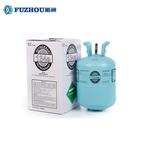

Refrigerant Gas R32
Zhejiang Jiasheng: Your Premium Helium Supplier!
Zhejiang Jiasheng Chemical Co.,Ltd. is a professional supplier of refrigerant, helium OEM processing and repeated packaging and filling services. Our company is located in Jiaxing City, Zhejiang Province, China, equipped with multiple fully automatic small can production lines (90 cans/minute) and automatic cylinder filling lines, and has created the refrigerant brand "F.continent" and the helium brand "AngelWing". Our products are sold to Europe, America, East Asia, Middle East, Africa, South Asia, North America, South America and other regions.
Rich Experienced:Our team consists of experts from various fields such as R&D, engineering, production and marketing. Each person has more than 10 years of experience in refrigerant R&D and production.
Compliance Production:Our company has the Republic of China cylinder filling license, movable pressure filling license, and the production process complies with ISO90001 certification.
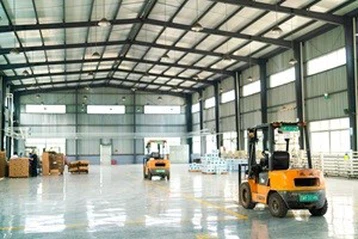
High Yield:Our production workshop covers an area of 4,300 square meters and contains multiple semi-automatic filling production lines and inspection equipment, which can automatically complete vacuuming, filling, heat sealing, palletizing and other operations. The workshop has a production capacity of 8 tons per hour, a daily production capacity of 100 tons, and an annual production capacity of 30,000 tons.
Strict Quality Inspection:From raw materials, production process, product sampling analysis to quality control, the company adopts German DIKMA company standard samples and CIPAC methods to ensure that the filling accuracy of a single bottle is within ±20g and the pass rate is 100%.


What is Refrigerant Gas R32?
R-32, also known as HFC-32, is an organic hydrofluorocarbon compound with the formula CH2F2. It’s a colorless odorless, mildly flammable gas which is insoluble in water. R32 is commonly used in air conditioning systems, considered a more environmentally friendly alternative to older refrigerants such as R22 or R410a. It is a single component refrigerant, which makes it easier to recycle, and the components of the air conditioning system smaller and lighter. It has a GWP of 675, which is roughly 30% lower than that of R410A. And it has an ODP of 0, which makes it equally harmless to the ozone layer as R410A.
Features of Refrigerant Gas R32
Easy to Manage
Our refrigerant R32 is a single component of a gas, and unlike other mixed refrigerants, its composition is very stable and therefore can be easily replenished on site without affecting its composition.
Zero ODP
Ozone depletion potential (ODP) is a measure of how much a compound may degrade the ozone layer. R32 is a hydrofluorocarbon with an ODP of zero, which means it does not harm the ozone layer.
Low GWP
Global warming potential (GWP) refers to the impact of different gases on global warming. The higher the GWP, the more heat the gas warms the Earth over a period of time. Compared with other types of refrigerants, R32 has a GWP of only 675, which is about 1/3 of conventional refrigerants.
Non-toxic
Our refrigerants are divided into two categories based on toxicity: Class A and Class B. R32 belongs to Class B, which is completely non-toxic and therefore safe for humans and the environment.
Application of Refrigerant Gas R32
Air Conditioning
R32 is a hydrofluorocarbon (HFC) refrigerant that is replacing traditional refrigerants such as R22 and R410A. It works by absorbing heat from the home environment and using a compressor and evaporator to produce cool air. This makes staying indoors more comfortable when the weather is warm. Refrigerant R32 is contained within the copper coils inside the AC unit. When hot indoor air blows over the coil, the refrigerant reacts, cooling the coil and sending cool air back into the home. This cycle is repeated several times to cool the house.
Heat Pump
A heat pump uses the same vapor compression refrigeration process as an air conditioner or refrigerator, but in the opposite direction, using circulating refrigerant as the medium to absorb heat from a cold space and release it into a warmer space. Refrigerants require only a small amount of energy to change from a liquid to a gas and back to a liquid. During normal operation of the heat pump, the refrigerant does not dissipate and remains at the same level as it changes between liquid and gaseous states.
Cooling System
Refrigerant R32 is commonly used in refrigeration systems such as vending machines, commercial refrigerators and freezers. It provides efficient cooling and reduced environmental impact compared to other refrigerants. It can replace other refrigerants such as R410A, R22 and R404A.
Differences Between R32, R22 and R410A Refrigerant Gases.
- Global Warming Potential (GWP): R32 has a lower GWP (657) compared to R22 (1810) and R410A (2088). The lower GWP of R32 means it has a lower impact on the environment compared to R22 and R410A.
- Energy Efficiency: R32 has a higher energy efficiency compared to R22 and R410A, which means that air conditioning systems using R32 require less energy to operate and can result in lower electricity consumption and cost.
- Flammability: R32 has a lower flammability compared to R22 and R410A, making it a safer option for air conditioning systems.
- Toxicity: R32 is considered to be less toxic compared to R22 and R410A, but it should still be handled with caution to avoid potential harm to humans and the environment.
- Compatibility: R32 is compatible with existing air conditioning systems that use R22 and R410A, making it a suitable alternative for retrofitting existing systems. However, it’s important to consider compatibility with the specific system and components before retrofitting to R32.
- Pressure: R32 operates at a lower pressure compared to R22 and R410A, which can result in smaller and lighter components for air conditioning systems.
- Cost: R32 is generally less expensive compared to R22 and R410A, making it a more cost-effective option for air conditioning systems.

Benefits of Refrigerant Gas R32
Each refrigerant has a Global Warming Potential (GWP) with carbon used as the base. Carbon has a GWP of 1. R410A has a GWP of 2,088 meaning that if one kilogram is released into the atmosphere it would have 2,088 times the harmful effect of one kilogram of carbon. That is why we are now seeing a move to a new refrigerant – R32, which has a GWP of 675 (two-thirds less than R410a).
There is a diversity of low GWP refrigerants available to select from. These include HFC 32 (or R32), HFO 1234yf and HFO (hydrofluoro olefin) blends, Ammonia (R717), Propane (R290) and C02 (R744). Unfortunately, none of these candidates is a perfect refrigerant when assessed across the 4 key criteria of
- Environment
- Energy
- Efficiency
- Safety and Economy
But many major air conditioning manufacturers have determined that R32 is the optimum choice for use in their products because of the following benefits:
Smaller Impact on Environment
R-32 has zero ODP (Ozone Depletion Potential) and its GWP (Global Warming Potential) is 675, which is lower than the GWP of currently used R-410A or R-22. It could reduce the charging volume by 30% compared to R-410A. R-32 related CO2 emissions decrease by 76% thanks to the lower GWP and the charging volume reduction.
High Energy Efficiency
The potential refrigerating effect of R-32 is 1.5 times that of R-22 or R-410A. The cooling seasonal performance factor (CSPF) of R-32 is higher than conventional refrigerants. Its peak power consumption is also lower, helping to alleviate power shortages in large cities during periods of high demand.
Low Flammability
International Standard ISO 817:2014 segregates the flammability of refrigerants into 4 categories as follows: Class 1 (No flame propagation), Class 2L (Lower flammability), Class 2 (Flammable) and Class 3 (Higher flammability). R32 falls into the “lower flammability” or Class 2L "mildly flammable" category. Class 2L refrigerants present the lowest risk of the 3 flammable categories and are defined by having a burning velocity of less than 10 cm per second. The characteristic of this low burning velocity is that the flame front does not propagate readily in a horizontal direction.
So, R32 will actually be good for the industry because it will allow companies to continue providing comfortable places for us all to work, shop and relax in, whilst complying with the latest legislation and being able to enhance their own CSR (Corporate Social Responsibility) with equipment using a refrigerant that minimises the effect on climate change.

Shortcomings of Refrigerant Gas R32

Safety Concerns
One of the primary concerns about R32 refrigerant is its flammability. The refrigerant belongs to the A2L classification, meaning it has a low-level flame potential. While this may not be a significant issue in controlled environments such as an innovation center, it is still a concern for household and commercial air conditioner users. Proper installation, maintenance, and usage of air conditioners that use R32 refrigerant can mitigate these risks significantly.

Retrofitting and Compatibility Issues
Another potential drawback of R32 refrigerants is retrofitting and compatibility issues with older air conditioning systems. Some air conditioners may not be compatible with R32 refrigerant due to differences in operating pressure and component types. It is essential to consult technical assistance from the manufacturer or a certified professional before attempting any retrofit or replacement.
What You Should Know When Use Refrigerant Gas R32
First Aid Measures
Eye contact
Immediately flush eyes with plenty of water, occasionally lifting the upper and lower eyelids. Check for and remove any contact lenses. Continue to rinse for at least 10 minutes. Get medical attention if irritation occurs.
Inhalation
Remove victim to fresh air and keep at rest in a position comfortable for breathing. If not breathing, if breathing is irregular or if respiratory arrest occurs, provide artificial respiration or oxygen by trained personnel. It may be dangerous to the person providing aid to give mouth-to-mouth resuscitation. Get medical attention if adverse health effects persist or are severe. If unconscious, place in recovery position and get medical attention immediately. Maintain an open airway. Loosen tight clothing such as a collar, tie, belt or waistband.
Skin contact
Flush contaminated skin with plenty of water. Remove contaminated clothing and shoes. To avoid the risk of static discharges and gas ignition, soak contaminated clothing thoroughly with water before removing it. Get medical attention if symptoms occur. In case of contact with liquid, warm frozen tissues slowly with lukewarm water and get medical attention. Do not rub affected area. Wash clothing before reuse. Clean shoes thoroughly before reuse.
Ingestion
Remove victim to fresh air and keep at rest in a position comfortable for breathing. Get medical attention if adverse health effects persist or are severe. Ingestion of liquid can cause burns similar to frostbite. If frostbite occurs, get medical attention. Never give anything by mouth to an unconscious person. If unconscious, place in recovery position and get medical attention immediately. Maintain an open airway. Loosen tight clothing such as a collar, tie, belt or waistband. As this product rapidly becomes a gas when released, refer to the inhalation section.
Handling and Storage
Protective Measures
Put on appropriate personal protective equipment. Contains gas under pressure. Do not get in eyes or on skin or clothing. Avoid breathing gas. Use only with adequate ventilation. Wear appropriate respirator when ventilation is inadequate. Do not enter storage areas and confined spaces unless adequately ventilated. Do not puncture or incinerate container. Use equipment rated for cylinder pressure. Close valve after each use and when empty. Protect cylinders from physical damage; do not drag, roll, slide, or drop.
Occupational Hygiene
Eating, drinking and smoking should be prohibited in areas where this material is handled, stored and processed. Workers should wash hands and face before eating, drinking and smoking. Remove contaminated clothing and protective equipment before entering eating areas.
Conditions for Storage
Store in accordance with local regulations. Store in a segregated and approved area. Store away from direct sunlight in a dry, cool and well-ventilated area, away from incompatible materials. Eliminate all ignition sources. Cylinders should be stored upright, with valve protection cap in place, and firmly secured to prevent falling or being knocked over. Cylinder temperatures should not exceed 52 °C (125 °F). Keep container tightly closed and sealed until ready for use.
Certificate Photo


Factory Photo