


Mixed Refrigerant
Zhejiang Jiasheng: Your Premium Mixed Refrigerant Supplier!
Zhejiang Jiasheng Chemical Co.,Ltd. is a professional supplier of refrigerant, helium OEM processing and repeated packaging and filling services. Our company is located in Jiaxing City, Zhejiang Province, China, equipped with multiple fully automatic small can production lines (90 cans/minute) and automatic cylinder filling lines, and has created the refrigerant brand "F.continent" and the helium brand "AngelWing". Our products are sold to Europe, America, East Asia, Middle East, Africa, South Asia, North America, South America and other regions.
Rich Experienced:Our team consists of experts from various fields such as R&D, engineering, production and marketing. Each person has more than 10 years of experience in refrigerant R&D and production.
Compliance Production:Our company has the Republic of China cylinder filling license, movable pressure filling license, and the production process complies with ISO90001 certification.
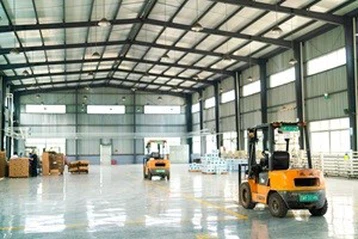
High Yield:Our production workshop covers an area of 4,300 square meters and contains multiple semi-automatic filling production lines and inspection equipment, which can automatically complete vacuuming, filling, heat sealing, palletizing and other operations. The workshop has a production capacity of 8 tons per hour, a daily production capacity of 100 tons, and an annual production capacity of 30,000 tons.
Strict Quality Inspection:From raw materials, production process, product sampling analysis to quality control, the company adopts German DIKMA company standard samples and CIPAC methods to ensure that the filling accuracy of a single bottle is within ±20g and the pass rate is 100%.


What is Mixed Refrigerant?
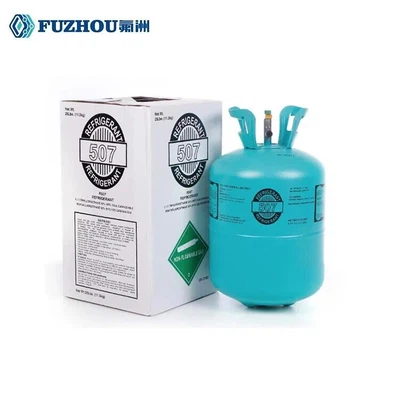
Mixed refrigerants are combinations of two or more refrigerants formulated to enhance or modify specific performance attributes compared to individual refrigerants. These blends are tailored to achieve desired temperature ranges, pressures, and efficiencies in various cooling applications.
Features of Mixed Refrigerant

Tailored Properties:
Mixed refrigerants are formulated by combining two or more individual refrigerants to achieve specific thermodynamic properties. This customization allows for targeted performance characteristics suited to particular temperature ranges or applications.

Varied Compositions:
Blends can consist of different refrigerants in precise proportions, altering boiling points, pressures, and heat transfer capabilities to meet the requirements of diverse cooling needs.
Complex Thermodynamics:
The behavior and performance of mixed refrigerants involve intricate thermodynamic interactions between their components. These interactions can affect phase changes, system efficiency, and overall cooling performance.

Application Specificity:
Mixed refrigerants are often designed for specialized applications, optimizing efficiency and performance in specific temperature ranges or operating conditions. Their versatility allows for tailored solutions across various industries and cooling systems.
Advantages of mixed refrigerant
Enhanced Efficiency:
Tailoring refrigerant blends allows for improved system efficiency and performance in specific temperature ranges.
Wider Operating Range:
Mixed refrigerants can expand the operational envelope compared to individual refrigerants, enabling them to cover a broader range of temperatures.
Customization:
Blending refrigerants permits customization to suit specific applications, optimizing performance for various cooling needs.
Environmental Benefits:
Some blends may have lower global warming potential (GWP) and reduced environmental impact compared to individual refrigerants.
Application Of mixed Refrigerant
Mixed refrigerants find diverse applications across various cooling systems due to their ability to combine the advantageous properties of different refrigerants. Here are some applications and examples:
Air Conditioning Systems:
Example: R-410A (Blend of R-32 and R-125)
Application: Widely employed in residential and commercial air conditioning systems due to its efficiency and environmental advantages.
Industrial Refrigeration:
Example: R-404A (Blend of R-125, R-143a, and R-134a)
Application: Used in low and medium-temperature refrigeration applications, such as in food processing and cold storage facilities.
Automotive Air Conditioning:
Example: R-1234yf (Blend of R-1234ze and R-134a)
Application: Utilized in vehicle air conditioning systems, aiming for improved environmental performance while maintaining efficient cooling.
Cascade Refrigeration Systems:
Example: Customized combinations for specific temperature ranges
Application: Applied in various industrial processes and ultra-low-temperature applications where a single refrigerant might not cover the necessary range.
Specialized Cooling Applications:
Example: Custom blends for unique cooling requirements
Application: Tailored solutions for niche industries requiring precise temperature control or specialized thermodynamic properties.
Transport Refrigeration:
Example: Blends optimized for transport refrigeration needs
Application: Ensuring controlled temperatures during the transit of perishable goods in refrigerated trucks or containers.
Factors to Consider When Choose Mixed Refrigerant
Thermodynamic Properties:
Assess the blend's thermodynamic characteristics such as pressure-temperature behavior, specific heat capacity, and enthalpy values. These properties should align with the desired temperature range and cooling capacity for the intended application.
Environmental Impact: System Compatibility:
Ensure compatibility with system components, including materials used in compressors, seals, and piping. Compatibility issues can lead to corrosion or malfunction, affecting system efficiency and longevity.
Efficiency and Performance:
Consider the efficiency of the mixed refrigerant in terms of its coefficient of performance (COP) and energy efficiency. Optimize for superior performance while meeting cooling requirements and minimizing energy consumption.
Operating Range:
Verify that the mixed refrigerant's operating range aligns with the intended temperature conditions. Some blends may excel in specific temperature ranges, while others might cover a broader spectrum.
Safety Considerations:
Assess the safety aspects of the refrigerant blend, including toxicity, flammability, and proper handling procedures. Ensure that safety protocols are in place to mitigate potential risks during storage, handling, and usage.
Availability and Cost:
Consider the availability of the mixed refrigerant and its cost-effectiveness for the intended application. Evaluate factors such as availability in the market, pricing, and potential long-term supply stability.
Regulatory Compliance:
Verify that the chosen blend complies with local and international regulations regarding refrigerant use, including restrictions on certain types of refrigerants or compliance with environmental standards.
Expertise and Support:
Consider the availability of technical support, expertise, and maintenance services for the specific mixed refrigerant. Access to knowledgeable suppliers or technicians can be crucial for proper handling and troubleshooting.
Installation Guide of Mixed Refrigerant System


Connections in General
All connections are brazed to the heat exchanger in the general vacuum brazing cycle. This process gives a very strong seal between the connection and the cover plate. However, take care not to join the counterpart with such force that the connection is damaged.
Depending on the application, there are many different versions and locations available for the connections, e.g. Compac flanges, SAE flanges, Rotalock, Victaulic, threaded connections and welding connections. It is important to have the correct international or local standard of connection, because they are not always compatible.
Some connections have an external heel to simplify the pressure and leakage testing of the brazed plate heat exchanger in production. Some connections are fitted with a special plastic cap to protect the threads and sealing surface of the connection, and to prevent dirt and dust from entering the brazed plate heat exchanger. This plastic cap should be removed with care, to prevent damage to the thread or any other part of the connection. Use a screwdriver, pliers or knife.
Threaded Connections
Threaded connections can be female or male, in wellknown standards such as ISO-G, NPT and ISO 7/1.
Soldering Connections
The soldering connections (sweat connections) are in principle designed for pipes with dimensions in mm or inches. The measurements correspond to the internal diameter of the connections. Some of SWEP's soldering connections are universal, i.e. fit both mm and inch pipes. These are denominated xxU, such as the 28U, which fits both 1 1/8" and 28.75 mm.
All brazed plate heat exchangers are vacuum-brazed with either pure copper filler or nickelbased filler. Under normal soldering conditions (no vacuum), the temperature should not exceed 800°C. The material's structure can be altered if the temperature is too high, resulting in internal or external leakage at the connection. It is therefore recommended that all soldering uses silver solder containing at least 45% silver. This type of solder has a relatively low soldering temperature and high moistening and fluidity properties.
Welding Connections
Welding is recommended only on specially designed welding connections. All SWEP's welding connections are made with a 30° chamfer on top of the connection. Do not weld pipes on other types of connections. The measurement in mm corresponds to the external diameter of the connection.
During the welding procedure, protect the unit from excessive heating by:
a.Using a wet cloth around the connection.
b.Making a chamfer on the joining tube and connection edges.
Use Tig or Mig/Mag Welding
When using electric welding circuits, connect the ground terminal to the joining tube, not to the back of the plate package (see Figure 8.15). Internal oxidation can be reduced by using a small nitrogen flow.
Certificate Photo


Factory Photo