



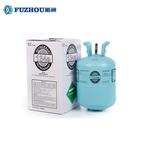

Single Refrigerant
Zhejiang Jiasheng: Your Premium Refrigerant and Helium Supplier!
Zhejiang Jiasheng Chemical Co.,Ltd. is a professional supplier of refrigerant, helium OEM processing and repeated packaging and filling services. Our company is located in Jiaxing City, Zhejiang Province, China, equipped with multiple fully automatic small can production lines (90 cans/minute) and automatic cylinder filling lines, and has created the refrigerant brand "F.continent" and the helium brand "AngelWing". Our products are sold to Europe, America, East Asia, Middle East, Africa, South Asia, North America, South America and other regions.
Professional team:Our team comprises specialists across R&D, production, and marketing domains. Within the R&D unit, we boast 1 senior engineer and 3 mid-level engineers, averaging over 8 years of invaluable experience. Our production leader brings over 20 years of expertise to the table. Collaborating with this highly skilled ensemble, we swiftly grasp your requirements, crafting tailored solutions to meet your needs.
Complete certificates: Our company has the Republic of China cylinder filling license and movable pressure filling license. The production process complies with ISO90001 certification, and we provide you with products that are legal and compliant.
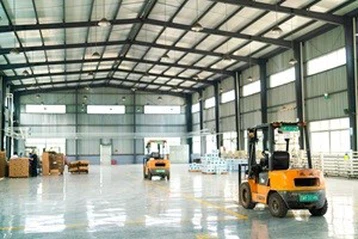
Intelligent workshop: Our production workshop covers an area of 4,300 square meters and has multiple automatic filling production lines and testing equipment, which can automatically complete vacuuming, filling, heat sealing, palletizing and other operations. The workshop production capacity is 8 tons per hour, the daily production capacity is 100 tons, and the annual production capacity is 30,000 tons.
High Quality Products: Our company adheres to strict quality control measures throughout the entire production process to ensure that each batch of products meets the highest industry standards. Our commitment to excellence begins with the selection of premium raw materials sourced from trusted suppliers known for quality. Rigorous testing and analysis procedures are integrated into each stage to ensure the purity, efficiency and safety of our refrigerants and helium. Additionally, our dedicated team of experts constantly monitors and refines our manufacturing techniques to stay at the forefront of technological advancements. This relentless pursuit of innovation ensures that our refrigerants and helium not only meet but often exceed performance expectations.


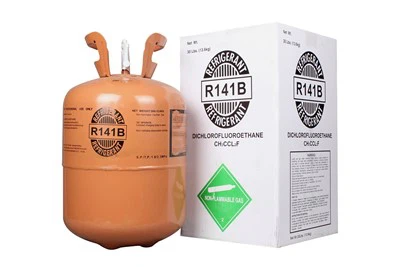


What is Single Refrigerant?
Single refrigerant is standalone refrigerant substance that operates within a refrigeration cycle, facilitating the transfer of heat and enabling the cooling process. It serves as the primary medium for heat absorption and release within the system.
Features of Single Refrigerant
Chemical Composition:
Single refrigerants consist of a singular chemical compound or element. Their composition remains uniform without any blend or mixture with other refrigerants,often optimized for particular temperature ranges and cooling capacities.
Specific Thermodynamic Properties:
Each single refrigerant exhibits distinct pressure-temperature relationships and thermodynamic properties. These characteristics define its behavior during the refrigeration cycle, including boiling point, latent heat, and specific heat capacity.
Application Range:
Single refrigerants often have a specified range of operating conditions where they perform optimally. This range could encompass low, medium, or high-temperature applications, dictating their effectiveness within specific thermal environments.
Environmental Impact:
Their environmental impact varies based on factors like global warming potential (GWP) and ozone depletion potential (ODP). Some single refrigerants may have lower environmental impact compared to others, contributing to their suitability in compliance with environmental regulations.
Advantages of single refrigerant
Simplified System Design:
Using a single refrigerant streamlines system design and engineering, reducing complexity in components and overall system architecture.
Ease of Maintenance:
Maintenance becomes more straightforward as there's only one refrigerant to manage, making servicing, leak detection, and repairs more efficient and less complicated.
Predictable Performance:
Single refrigerants often exhibit consistent and predictable behavior in terms of efficiency and cooling performance, simplifying system operation and troubleshooting.
Reduced Risk of Contamination:
Compared to systems with multiple refrigerants, single refrigerants minimize the risk of cross-contamination between different refrigerant types, ensuring system integrity and performance.
Optimized Efficiency:
Some single refrigerants are specifically formulated for optimal efficiency within certain temperature ranges, maximizing the cooling capacity of the system.
Compatibility:
They tend to be more compatible with system components, reducing the risk of corrosion or damage to equipment, thereby extending the system's lifespan.
Single refrigerants have extensive applications across a spectrum of industries, spanning household refrigeration, commercial cooling systems, industrial refrigeration, automotive air conditioning, and more. Here are some prevalent instances where single refrigerants are commonly employed:
R-134a
Automotive Air Conditioning: Widely used as a refrigerant in automotive air conditioning systems due to its non-flammability and compatibility with system components.
Commercial Refrigeration: Found in small to medium-sized refrigeration units, vending machines, and some residential air conditioning units.
R-410A
Air Conditioning: Commonly used in new residential and commercial air conditioning systems due to its efficiency and lower environmental impact compared to older refrigerants like R-22.
R404A
Commercial Refrigeration: Utilized in supermarket refrigeration systems, walk-in freezers, and other commercial cooling applications due to its cooling efficiency and compatibility with existing systems.
Components of Single Refrigerant System
The simplest refrigeration system therefore consists of an evaporator, a compressor, a condenser and an expansion valve.
Evaporator
Refrigeration can be achieved with ammonia without any equipment whatsoever. If liquid ammonia is poured into an open container (an evaporator) surrounded by ordinary air at ordinary atmospheric pressure, it will immediately begin to boil at -33˚C. There will be a continuous flow of heat from the surrounding air, through the walls of the container to the boiling ammonia. Moisture from the air will condense and freeze on the exterior of the container. The refrigerant must be delivered to the evaporator as a liquid because it absorbs heat best by vaporizing.
Heat Exchanger
Because the refrigerant leaves the evaporator as a vapor, it needs to be condensed to a liquid before it can be used again. To condense a refrigerant, the latent heat given off by the vapor must be transferred to another medium, such as water or air, in a condenser. The surrounding medium must be at a lower temperature than the condensing temperature of the refrigerant.

Scroll Compressor
As the temperature of the available water or air is always higher than that of the boiling refrigerant in the evaporator, the refrigerant cannot be condensed as it leaves the evaporator. To condense the vapor, its pressure must be increased to a point where its condensing temperature is above the temperature of the water available for the condensing process. For this purpose, a compressor is needed.
Expansion valve
To maintain the difference in pressure between the condenser and the evaporator caused by the compressor, an expansion valve is needed in the cycle. The expansion valve separates the high-pressure part of the system from the low-pressure part. Only a small trickle of refrigerant liquid flows through the valve. In fact, the valve is always adjusted so that the rate at which liquid passes through it is the same as the evaporation rate.
Factors to Consider When Choose Single Refrigerant
Working performance: The thermodynamic properties of the refrigerant are the primary consideration, including its compression capacity, heat transfer performance and energy efficiency at different temperatures. Make sure the refrigerant selected is suitable for the required operating temperature range.
Environmental Impact: It is critical to consider the environmental impact of refrigerants. For example, focus on its ozone depletion potential (ODP) and contribution to global warming (GWP). Choosing refrigerants with low ODP and GWP can help reduce adverse environmental impacts.
Safety: The safety of refrigerants during use and leakage is a factor that must be considered. This includes consideration of toxicity, flammability, stability and handling in case of accidents.
System Compatibility: Make sure the selected refrigerant is compatible with the materials and components in the refrigeration system to avoid corrosion or damage to the equipment.
Regulatory requirements: Various countries and regions have formulated different regulations and standards for the use of refrigerants. Make sure the refrigerant selected complies with local and international regulatory requirements.
Cost-effectiveness: Consider the purchase cost, maintenance cost and long-term operating cost of the refrigerant to ensure that the selected refrigerant is an economical and reasonable choice.
What You Should Know When Use Single Refrigerant
Maintenance and Handling:
Understanding the correct procedures for storing, using, and managing refrigerants is crucial. Regular system maintenance and monitoring are essential to preempt leaks or potential issues.
Safety Requirements and Measures:
Comprehend the safety characteristics of refrigerants, encompassing their toxicity, flammability, and protocols in case of leaks or accidents. Ensuring the team is well-versed in proper safety protocols is imperative.
Refrigerant Toxicity:
The toxicity of refrigerants denotes the potential harm caused if ingested. Labels on your refrigerant solution might specify exposure limits. While any exposure carries risks, lower levels typically pose fewer health hazards.
Acute Refrigerant Poisoning:
This occurs after short-term exposure to highly concentrated refrigerants, often stemming from malfunctions or leaks in air conditioning or refrigeration systems.
Chronic Refrigerant Poisoning:
Repetitive, prolonged exposure to refrigerant chemicals, common among technicians working regularly with such machinery, leads to chronic poisoning. Ensuring the functionality of leak detectors and monitoring systems in heavy equipment usage is crucial.
Treating Refrigerant Poisoning:
Immediate evacuation from an area with a refrigerant leak is vital. Seek fresh air and promptly call for medical assistance, providing detailed incident information.
Treatment may include:
- Intravenous fluids to fortify the immune system and repair damage.
- Symptom-specific medications.
- Gastric tube insertion to eliminate toxins.
- Antidotes against toxins.
- Skin cleansing to prevent infection.
- Surgical intervention for severe skin burns.
- Oxygen therapy to enhance oxygen levels.
- Delaying treatment exacerbates conditions; swift medical attention mitigates potential harm. Untreated refrigerant poisoning could prove fatal within 72 hours or result in permanent brain damage if not addressed promptly.
Certificate Photo


Factory Photo


Frequently Asked Questions of Single Refrigerant