

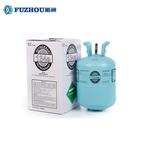

Refrigerant Gas R410a
Zhejiang Jiasheng: Your Premium Helium Supplier!
Zhejiang Jiasheng Chemical Co.,Ltd. is a professional supplier of refrigerant, helium OEM processing and repeated packaging and filling services. Our company is located in Jiaxing City, Zhejiang Province, China, equipped with multiple fully automatic small can production lines (90 cans/minute) and automatic cylinder filling lines, and has created the refrigerant brand "F.continent" and the helium brand "AngelWing". Our products are sold to Europe, America, East Asia, Middle East, Africa, South Asia, North America, South America and other regions.
Rich Experienced:Our team consists of experts from various fields such as R&D, engineering, production and marketing. Each person has more than 10 years of experience in refrigerant R&D and production.
Compliance Production:Our company has the Republic of China cylinder filling license, movable pressure filling license, and the production process complies with ISO90001 certification.
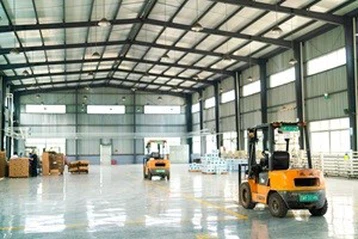
High Yield:Our production workshop covers an area of 4,300 square meters and contains multiple semi-automatic filling production lines and inspection equipment, which can automatically complete vacuuming, filling, heat sealing, palletizing and other operations. The workshop has a production capacity of 8 tons per hour, a daily production capacity of 100 tons, and an annual production capacity of 30,000 tons.
Strict Quality Inspection:From raw materials, production process, product sampling analysis to quality control, the company adopts German DIKMA company standard samples and CIPAC methods to ensure that the filling accuracy of a single bottle is within ±20g and the pass rate is 100%.


What is Refrigerant Gas R410a?
R-410A is a near-azeotropic mixture of difluoromethane (CH2F2, called R-32) and pentafluoroethane (C2HF5, called R-125), which is used as a refrigerant in air conditioning applications. Unlike many haloalkane refrigerants it does not contribute to ozone depletion, or contribute to ozone depletion, is therefore widely used. R410A is considered a Class 1 refrigerant, which means it's virtually non-combustible under most conditions. However, it must be charged as a liquid. Charging it as a gas can cause the refrigerant to separate and the unit to operate improperly.
Features of Refrigerant Gas R410a
Stable Performance
R-410A has a high refrigeration capacity. Even with repeated exposure, its AEL (allowable exposure limit) value is 1000 ppm (8 hours TWA), and the toxicity of R-410A remains very low.
High Compatibility
The capacity and pressure of R410A are higher than R22, and the working pressure is 50%-60% higher. It can also be used in small-displacement compressors or smaller diameter pipes and valves.
Widely Used
R410a, which is an HFC (hydrofluorocarbon) refrigerant and therefore does not have any ozone depletion potential, is commonly introduced in residential and commercial air conditioning products and its demand will gradually increase.
Energy Saving
Compared with the R22 system, the evaporator heat transfer of the R410A system is 35% higher and the condenser heat transfer is 5% higher. This will reduce further material costs in the manufacture of R410A systems, especially in long-tube appliances and multi-wire systems.
Application of Refrigerant Gas R410a
Chiller systems are used to cool water or other fluids for air conditioning and industrial processes. R410A is widely used in chiller systems due to its superior performance and environmental friendliness. Some of the applications of R410A in chiller systems are:
Air Conditioning
R410A is used in air conditioning systems to cool the air that circulates in buildings. It is an energy-efficient refrigerant that can reduce the energy consumption of air conditioning systems.
Industrial Processes
R410A is used in industrial chiller systems to cool fluids that are used in manufacturing processes. It is an effective refrigerant for maintaining precise temperature control in industrial applications.
Food Storage
R410A is used in commercial refrigeration systems to store food and beverages at a low temperature. It is an efficient refrigerant that can maintain a consistent temperature in refrigerated spaces.
Benefits of Refrigerant Gas R410a
High Energy Efficiency
R410A directly translates to cost savings on your utility bills. Its higher heat-absorption capacity allows for quicker cooling, ensuring your living spaces reach your desired temperature rapidly, even on scorching summer days. This refrigerant has a significantly higher heat exchange rate than older options, meaning your cooling system will require less energy to maintain the desired temperature in your home.
Eco-Friendly
One of the standout features of R410A is its environmentally friendly composition. Unlike older refrigerants that contribute to ozone depletion and global warming, R410A has zero ozone depletion potential. If you’re considering upgrading or replacing your cooling system, choosing R410A ensures compatibility.
Longer Lifespan
Due to its efficient heat exchange properties, R410A can contribute to prolonging the lifespan of your equipment, reducing strain on your cooling system in fewer breakdowns.

What May Replace Refrigerant Gas R410a?
R-32
- Zero Ozone Depletion
- 1/3 GWP of HFC 410A
- Superior energy efficiency
- High refrigeration capacity & thermal conductivity
- Low pressure drop
- Single component refrigerant easy to handle and recover
- Low toxicity
- Readily available (R32 is used in the manufacture of R410A which is a blend of 50% R32 & 50% R125
- R-32 is currently used with other refrigerant gasses to make R-410a. R-410a is the current refrigerant choice for all manufacturers of HVAC equipment (Until January 1, 2023)
Note: R-32 is technically listed as flammable. Studies have shown, however, that the conditions needed to ignite R-32 are so specific and extremely unlikely to exist and as such it is not something concerning in the vast majority of residential or commercial applications.
R-454B
- Higher efficiency for heating than R-32
- Requires less refrigerant by 5-10% than equipment using R-410a uses
- R-454B has a lower GWP (Global Warming Potential) at 465-GWP than does R-32 at 675-GWP
- The close operating pressures and temperatures of R-454B when compared with R-410a allows manufacturers to build equipment using parameters that are very close to that of equipment that uses R-410a
Note: R-454B is technically listed as flammable much like R-32, although to a lesser degree. Studies have shown, however, that the conditions needed to ignite R-454B are likewise so specific and extremely unlikely to exist and as such it is not something concerning in the vast majority of residential or commercial applications.
Differences from Similar Refrigerants of R410a

R32 Refrigerant
R32 is well known as the more environment friendly successor of R410A. A common misconception is that R410A damages the ozone layer, as explained before. The ODP (Ozone Depletion Potential) of both refrigerants is actually zero. The difference with regards to the environment lies within the GWP (Global Warming Potential). The GWP of R32 is 675, whereas the GWP of R410A is 2,088. For comparison, the GWP of R-508B is 13,396.
Furthermore, R32 is about 20% more efficient than R-410A. This brings down operating and maintenance costs. So, what about recycling? R32 is the winner once again, it is easier to recycle because this refrigerant is single component.
However there are also benefits to R410A in certain situations. We have noticed that a lot of clients still require R410A because:
- Within the maritime industry R410A is still the standard for most end-users when it comes to ATEX zones. Therefore they require installers and procurement companies to source R410A A/C units.
- R410A is allowed to be transported by plane. R32 is forbidden in air transport because it is considered a dangerous good. When clients are in a hurry, they often request R410A units.
- R32 is still relatively new and also mildly flammable. Not all countries and installers are familiar with R32, therefore they will not accept it in their projects.
- Larger installations, such as VRF equipment for cooling buildings, are required to use R-410A as opposed to R32. If the R32 leaks into a small room within the building due to a defect, the amount of R32 in the air could exceed the Lower Explosion Limit (LEL). This would create an explosive atmosphere, which we try to prevent at all times.
R22 Refrigerant
R-22, also called R22 freon, was used in most air conditioners manufactured before Jan. 1, 2010, to cool the air inside of air conditioning systems. Though R-22 did a great job at keeping the insides of homes nice and cool, its effect on the ozone layer had the opposite effect on the planet as a whole.
The hydrochlorofluorocarbon (HCFC) chemical used in the refrigerant depletes the ozone layer, allowing ultraviolet radiation to beam down on the ecosystem. Not to mention, R22 is toxic and can cause respiratory illnesses like shortness of breath and light-headedness.
To eliminate ozone-depleting HCFCs, the Environmental Protection Agency phased out the use of R-22. In addition to banning companies from manufacturing and importing these units in 2010, the EPA phased out 90% of R-22 coolant in 2015. It was completely banned on Jan. 1, 2020.
Homeowners who still use the R-22 coolant in their HVAC systems now have to rely on a limited supply of recycled or stockpiled quantities of the R-22 coolant.

Environmental Effects of Refrigerant Gas R410a
Unlike alkyl halide refrigerants that contain bromine or chlorine, R-410A (which contains only fluorine) does not contribute to ozone depletion and is therefore becoming more widely used as ozone-depleting refrigerants like R-22 are phased out. However, like methane, its global warming potential (GWP) is appreciably worse than CO2 for the time it persists. Because R410A is a 50% combination of CH2F2 (HFC-32) and 50% CHF2CF3 (HFC-125), it is not easy to express their combined effects in a single global warming potential (GWP). However, HFC-32 has a 4.9 year lifetime and a 100-year GWP of 675 and HFC-125 has a 29-year lifetime and a 100-year GWP of 3500. The combination has a GWP of 2088, higher than that of R-22 (100-year GWP=1810), and an atmospheric lifetime of nearly 30 years compared with the 12-year lifetime of R-22.
Since R-410A allows for higher SEER ratings than an R-22 system by reducing power consumption, the overall impact on global warming of R-410A systems can, in some cases, be lower than that of R-22 systems due to reduced greenhouse gas emissions from power plants. This assumes that the atmospheric leakage will be sufficiently managed. Under the assumption that preventing ozone depletion is more important in the short term than GWP reduction, R-410A is preferable to R-22.
Myths about the R-410A Phase Out
The Phase Out Will Happen Overnight
Originally the phase out of R-410A equipment was slated for January 1, 2023—for many reasons that goal is not going to be reached. For most HVAC applications (excluding VRF), the goal seems to be a ban on any refrigerant with a GWP greater than 750 by 2025. This would exclude manufacturing equipment using R-410A (GWP of 2088). Much like the phaseout of R-22, the government is taking its time on eliminating it to avoid drastic spikes in costs. The price of R-22 was relatively stable until the complete ban on manufacturing/imports went into effect in 2020.
R-410A Price Will Increase
It will go up in price, but if it skyrockets, it will be unlikely to be caused by the phase out alone. Most of the expected increases in the costs associated with R-410A are likely to be caused by the same inflationary pressures that a lot of products are experiencing. The metal containers used to contain the refrigerant now cost more due to the price of metals going up. The labor market is tight everywhere meaning the labor needed to manufacture the containers and the refrigerant has gone up.
While some R410A is manufactured in the US, we have gotten a lot of it from… you guessed it, China. Shipping costs to move the refrigerant across the Pacific Ocean have soared recently. That container ship carrying all those jugs of R410A has seen costs quadruple in recent history (fingers crossed that prices come down in the near term)!
I Will Have to Replace My Equipment to Avoid Bans
No, you won’t. We will be able to repair your systems well into the expected life of your new 410A system. The current phase out on R410A lasts well into 2037 according to the phase down schedule enshrined in the AIM Act (Dec, 27, 2020), and since most air conditioner life expectancy is 10-15 years, the system you bought this year will be able to be repaired for years to come.
Certificate Photo


Factory Photo